Notice: Function _load_textdomain_just_in_time was called incorrectly. Translation loading for the acf domain was triggered too early. This is usually an indicator for some code in the plugin or theme running too early. Translations should be loaded at the init action or later. Please see Debugging in WordPress for more information. (This message was added in version 6.7.0.) in /home/frogmishelf/public_html/wp-includes/functions.php on line 6170

Notice: Function _load_textdomain_just_in_time was called incorrectly. Translation loading for the wordpress-seo domain was triggered too early. This is usually an indicator for some code in the plugin or theme running too early. Translations should be loaded at the init action or later. Please see Debugging in WordPress for more information. (This message was added in version 6.7.0.) in /home/frogmishelf/public_html/wp-includes/functions.php on line 6170

Warning: Cannot modify header information - headers already sent by (output started at /home/frogmishelf/public_html/wp-includes/functions.php:6170) in /home/frogmishelf/public_html/wp-content/themes/frogmi/functions.php on line 93

Warning: Cannot modify header information - headers already sent by (output started at /home/frogmishelf/public_html/wp-includes/functions.php:6170) in /home/frogmishelf/public_html/wp-includes/feed-rss2.php on line 8
Technology archivos - Shelfmanager https://frogmishelf.com/blog/tag/technology/ Increase sales and productivity with an optimized in-store SKU level execution Logo starbucks Logo 7 eleven Logo Bizarro Logo Farmacia ahumada Logo Bci Seguros Logo Burgerking Logo Burgerking Logo starbucks Logo 7 eleven Logo Bizarro Logo Farmacia ahumada Logo Bci Seguros Logo Burgerking Logo Burgerking Logo starbucks Logo 7 eleven Logo Bizarro Logo Farmacia ahumada Logo Bci Seguros Logo Burgerking Logo Burgerking Mon, 24 Oct 2022 21:30:43 +0000 en-US hourly 1 https://wordpress.org/?v=7.0 https://frogmishelf.com/wp-content/uploads/2022/05/cropped-favicon-frogmi-32x32.png Technology archivos - Shelfmanager https://frogmishelf.com/blog/tag/technology/ 32 32 4 in-store technology trends that are shaping 2022 https://frogmishelf.com/blog/4-in-store-technology-trends-that-are-shaping-2022/ https://frogmishelf.com/blog/4-in-store-technology-trends-that-are-shaping-2022/#respond Mon, 24 Oct 2022 21:30:43 +0000 https://blog.frogmi.com/4-in-store-technology-trends-that-are-shaping-2022/ A return to brick-and-mortar locations is pushing retailers to be innovative as they juggle customer experience with labor efficiency...

La entrada 4 in-store technology trends that are shaping 2022 se publicó primero en Shelfmanager.

]]>

Source: https://www.retaildive.com

A return to brick-and-mortar locations is pushing retailers to be innovative as they juggle customer experience with labor efficiency.


With the wave of COVID-19 pandemic restrictions and store closures at its end, 2022 has largely meant a return to brick-and-mortar retail.

Given the pullback in e-commerce spend and retailers losing sales amid inflationary pressures, overall technology budgets might not be at the height they once were. This leaves in-store innovation in a predicament.

Global retail technology investment dropped 43% to $13.2 billion in Q2 2022 compared to about $23 billion in Q1 2022, according to a report from CB Insights in July. Additionally, retail tech deals were down 21% quarter over quarter, and only seven companies went public compared to 11 in the previous quarter.

However, in-store technology and innovation aren’t exactly dead. Shoppers may have eased their online buying habits to a degree, but brick-and-mortar stores aren’t immune to the longevity of digital transformation. In fact, the store management technology sector saw an increase in funding during Q2 with a 25% quarter-over-quarter bump to $3 billion compared to $2.4 billion in Q1, according to CB Insights.

Retailers can still benefit from innovating with convenience and might want to look at in-store personalization to differentiate themselves in the market, according to a Deloitte report from Rob Harrold and Adam York.

What types of technology brought convenience and personalization to the in-store experience this year? And which ones have the potential to stick around?


1. BOPIS

Buy online, pick up in store services continue to be sought after even as pandemic restrictions have waned. In March, data from Insider Intelligence predicted that U.S. shoppers will spend $95.87 million on BOPIS this year — a 19.4% increase year over year.

BOPIS, which is sometimes known as click and collect, seemed like a win-win during pandemic restrictions, as shoppers could support physical brick-and-mortar stores without having to spend time in closed public spaces.

The holidays have the potential to show BOPIS’ strength. This season 39% of shoppers expect BOPIS to account for 50% or more of their shopping, according to a report by Bluedot shared with Retail Dive.

That said, overall interest has somewhat decreased since 2020. About 78% of shoppers plan to use BOPIS in some regard this season, which is down slightly from 81% in 2020, according to Bluedot.

Not all consumers are more likely to use the option though. Millennial males in urban environments are more likely to use BOPIS, according to data from Morning Consult. Shoppers in higher-income households are also more inclined to use this purchasing option.

While several retailers added BOPIS and have reported positive results from the service — including Target, Sally Beauty and Office Depot — others are just now jumping on board. Five Below last month released its own buy online, pick up in store program.

BOPIS requires technology or a system that makes it efficient and successful for all parties involved, which is something many retailers are focused on.

Retailers are “starting to think about productivity, efficiency and cost that is top of mind for everybody,” Lokesh Ohri, a principal in Deloitte’s digital practice, told Retail Dive. “Buy online, pickup in store and all the tech involved around doing that efficiently at the store level, either picking front of house or backup backroom … has stuck around and is scaling pretty fast.”


2. QR codes

That weird little black-and-white square that looks like a Rorschach test? Yes, retailers — not just restaurants — are using those.

QR codes are square barcodes that can be scanned using mobile phone cameras to be directed to more information or payment portals. The technology was actually invented decades ago, but quickly garnered adoption during the COVID-19 pandemic when menus and person-to-person payments were pushed aside.

“It’s become ubiquitous in the market,” Ohri said. “But if you and I were speaking seven years ago, there wasn’t this big hype about QR codes.”

QR codes have the potential to be a way in which customers can discover more information about a product, according to Ohri, who added it “gives them better insights into buying that product, into making that decision and into comparing information across other products.”

In January, Walmart launched an interactive store prototype at its incubator location in Arkansas that featured QR codes along with other in-store technology to help “create opportunities for digital exploration,” the company said at the time. Instacart last month began rolling out QR codes as part of an expanded connected technology suite of products with partner retailers. Additionally, Amazon included the technology in its first fashion retail location this May, where the codes provide more information on sizes and reviews.

EThese cases show that QR codes can deliver personalization for shoppers who might want recommendations based on what they’re inquiring about, but also create a level of convenience for associates who can spend more of their time on operational tasks.


3. Store operations

In line with Ohri’s belief that retailers are thinking more about efficiency and productivity, the technology behind store management and operations continues to grow.

That encompasses anything from technology that helps automate tasks — freeing up labor — to using more data-driven approaches to understanding stock levels.

The top equity deals in the retail store management sector for Q1 this year involved a $500 million deal for inventory optimization company Relex Solutions, according to another CB Insights from April. Retail unicorn Swiftly Systems — an e-commerce technology company now focusing on brick-and-mortar optimization — got its second $100 million investment in September. For Q2, a wholesale marketplace platform for retailers to connect with brands took the top spot in the quarter with $416 million.

Labor management is top of mind for everyone right now with the potential to use technology for cost savings, according to Ohri.

“They’re looking at labor management, communication, compliance store tasks, store audits, and using digital tools to simplify, as well as standardize those activities,” Ohri said. “So things that used to take 11 to 13 hours to do are now taking eight hours to do.”

A unique approach to store management technology is Lowe’s digital twin store. In September, the home improvement retailer announced it was experimenting with a digital replica of a store where associates can interact with and visualize store data. The concept was first introduced to two locations and allows associates to use augmented reality headsets for a variety of tasks, such as viewing items available on higher shelves instead of needing to climb a ladder.


4. Fitting room enhancements

Plenty of brands have experimented this year with enhancing the fitting room experience.

H&M started using a smart mirror in some COS stores in May, where customers can get personalized styling recommendations from the mirror as it senses what products — including their size and color — shoppers brought in. Customers can request new items to be sent to their dressing room without needing to leave the space. The retailer also started testing mirrors on the showroom floor that can assist with virtual try-ons, as well as returns.

Similarly, Savage x Fenty opened its first store in Las Vegas this January, which has fitting rooms with digital kiosks that shoppers can use to scan products to check prices and see similar items.

This approach might be considered a way to free up associate time. However, it might not be that simple despite its increased adoption.

“I don’t see virtual fitting rooms work as well as we can always want them to work,” Ohri said. “I find that anyone who’s ever deployed them … they will tell you that the number of associate activities actually didn’t go down. Because first, consumers need to learn how to use that tablet, because it’s usually not as intuitive. Second, they need help with the products that they have anyway. And third, they’re kind of really concerned about the data and the privacy. So it actually has increased associated tasks at store rather than reduce them.”

La entrada 4 in-store technology trends that are shaping 2022 se publicó primero en Shelfmanager.

]]>
https://frogmishelf.com/blog/4-in-store-technology-trends-that-are-shaping-2022/feed/ 0
My Favorite Computer Science Books https://frogmishelf.com/blog/my-favorite-computer-science-books/ https://frogmishelf.com/blog/my-favorite-computer-science-books/#respond Thu, 21 Apr 2022 14:28:59 +0000 https://frogmishelf.com/blog/mis-libros-favoritos-de-informatica-y-ciencias-de-la-computacion/ Hi! I’m Ignacio, CTO at Frogmi®. I've been working in the software industry for 10+ years, but I did not study computer science engineering....

La entrada My Favorite Computer Science Books se publicó primero en Shelfmanager.

]]>

Hi! I’m Ignacio, CTO at Frogmi®. I’ve been working in the software industry for 10+ years, but I did not study computer science engineering. In fact, I’m an electrical engineer. Fortunately, I have had excellent friends who are software engineers, and who recommended me great computer science books, some of which had a strong impact on my professional development. Given the above, I decided to write this article sharing the books that contributed the most to me, along with why and what I enjoyed most about them.

Understanding Computation, by Tom Stuart

As you may imagine, I didn’t take courses like computer theory or programming languages while studying. Therefore, this book was instrumental in learning those topics. Understanding Computation is a book that shows you how Automatas, Turing-Machine, Compilers, and Functional Programming work. But its most remarkable feature is that all the examples are done in ruby, so it’s simple to understand how they work. I certainly recommend this book if you want to learn about these topics for the first time, like me, or if you want to revisit them following this new ruby approach.

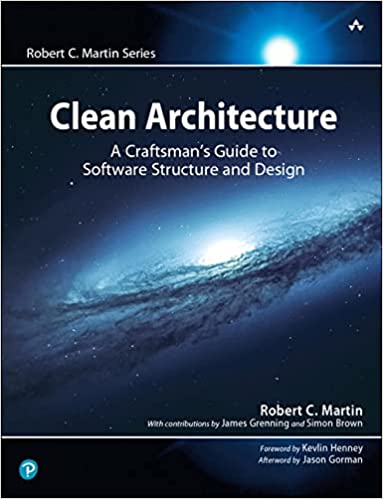
Clean Architecture by Robert C., Martin

This book explains how to design scalable and easy-to-maintain software. It describes the three main programming languages paradigms: procedural, object-oriented, and functional. Then, it depicts how to apply some helpful design principles, like SOLID principles.

What I liked most from this book is the concept that business logic should never depend on details (databases, frameworks, UI are details), and the usual way to resolve this is using dependency inversion.

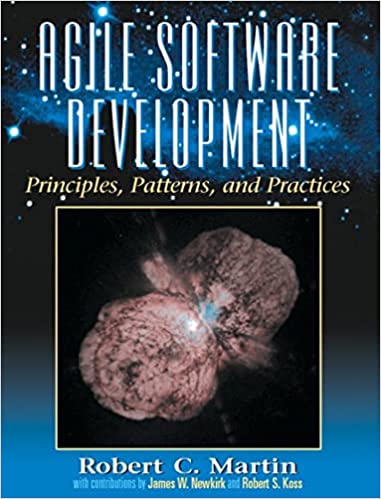
Agile Software Development, Principles, Patterns, and Practices by Robert C., Martin

 Following Clean Architecture this is another book from Robert C. Martin (a.k.a. Uncle Bob). In this book, Uncle Bob explains the SOLID principles and how to use many practical design patterns, providing excellent examples (and a lot of code). Thanks to this book, I truly understood why OOP is essential for building scalable software. Despite it being from 2002, this book is still relevant today. 

Bonus: the book has a transcription of Uncle Bob’s pair programming session that is very useful to understand pair programming’s value.

Refactoring by Martin Fowler

Refactoring is the process of improving the code without changing its functional specifications, meaning that the existing tests aren’t modified. The way to achieve this is by following the sequence: doing small changes and running tests; doing small changes and running tests; and so on. This book catalogs those most common ‘small changes’ for doing refactoring. On top of this, you will very insightful find a step-by-step refactoring example in the introduction.

Peopleware – by Tom DeMarco & Timothy Lister

This book is not as technical as the others on my list, but I absolutely recommend it. I heard someone saying that we, programmers, are more translators than anything else. Our job is to understand what people need and write it in a language that a computer can understand, and that’s undoubtedly a social ability. In this book, DeMarco and Lister show us, with data, how most issues in software development are not technical but sociological.

I hope these recommendations are as helpful to you as they were to me.

If you want to talk about them, I’ll be happy to hear from you. Just write me! =)In case you want to work with us and join Frogmi®, we are always looking for new talent! Check out our open job positions for developers here

La entrada My Favorite Computer Science Books se publicó primero en Shelfmanager.

]]>
https://frogmishelf.com/blog/my-favorite-computer-science-books/feed/ 0
The effects of the Phantom Inventory on retailers https://frogmishelf.com/blog/the-effects-of-the-phantom-inventory-on-retailers/ https://frogmishelf.com/blog/the-effects-of-the-phantom-inventory-on-retailers/#respond Tue, 22 Mar 2022 12:42:10 +0000 https://frogmishelf.com/blog/los-efectos-del-inventario-fantasma-para-los-retailers/ Inventory is one of the retailers' most significant assets, so it should not be a surprise the number of resources dedicated and technology developed for its optimization...

La entrada The effects of the Phantom Inventory on retailers se publicó primero en Shelfmanager.

]]>

Inventory is one of the retailers’ most significant assets, so it should not be a surprise the number of resources dedicated and technology developed for its optimization, such as software, artificial intelligence, and machine learning tools for demand forecasting and supply chain optimization.

However, despite all these efforts and the growing sophistication of inventory management systems, there is still an Achilles heel that no retailer has been able to overcome: phantom inventory.

Phantom inventory refers to goods that appear in the inventory system but are not available for sale, either because they are lost in the back room, out of display in the store, or simply no longer physically exist.

Phantom inventory is exceptionally costly and significantly affects retailers’ bottom line, as it essentially prevents products from being available to customers. But that’s not all. Phantom inventory also hurts inventory management, demand forecasting, online sales, analysis, and decision-making capabilities, to name a few. This blog will present the consequences of having phantom inventory problems for retailers.

Loss of sale

Loss of sales is the most obvious effect of phantom inventory since you cannot sell a product that is not physically available to the customer.
Phantom inventory generates a decrease in shelf availability, making it impossible for customers to find the products they are looking for. Studies show that when a customer faces a stock-out, they may decide to substitute a similar item, switch brands, choose to shop at another store or abandon the purchase. Regardless of the decision, the retailer will be affected, receiving 2-3% direct sales losses depending on the category.

Inventory management

As we have seen, one of the origins of phantom inventory is the discrepancy between physical and system inventory levels. Let’s consider that according to the GS1 US Survey, the average retailer in the United States has an inventory pressure of only 63%. The chances of having phantom inventory are pretty high.
Beyond accuracy, phantom inventory generates a chain reaction, disrupting processes that originate from recorded data, such as automatic purchases based on reorder points. An imbalance between the two inventories (systemic and physical) can generate stock-outs when the lack of stock in the store is identified too late; or overstocking, in case the system has registered a lower quantity than the actual one.

Non-compliance in online sales:

The adoption of e-commerce is a reality that has accelerated in recent years, putting pressure on retailers facing the highest levels of competition.
Discrepancies between the systems and physical stock create havoc in meeting online demand.
According to Peoplevox’s E-Commerce Fulfilment Report, 34% of retailers have delayed the shipment of a purchase order because they mistakenly sold a product that was not in stock. Phantom inventory leads to accepting purchase orders that cannot be fulfilled because the inventory is not actually available in the store. If you don’t pay attention, this problem will only be identified when an operator notices that there is insufficient produce to fill the order. Thus, phantom inventory tricks retailers who find themselves unable to meet their customers’ expectations.

Poor information, analysis, and conclusions

The existence of phantom inventory is undoubtedly a problem of data, a discrepancy between physical stock and that recorded in the system. And as the saying goes: garbage in, garbage out. This means that when a retailer has a phantom inventory problem – and we have already established that it is very likely to have one – the analysis and conclusions drawn from this data will be compromised.
Phantom inventory can lead to misreporting sales under projections, leading the retailer to think that a promotion is not delivering the expected result, or a product was not as successful as thought. The sales team could be analyzing and concluding without knowing that the product was not in stock or that the promotion was never implemented because there was not enough merchandise, even leading to take actions in terms of product mix or promotional strategy.

On the other hand, incorrect inventory recording will affect the supply chain. Phantom inventory will distort sales, and consequent demand projections, since the system will show available stock that has not been sold when in fact, it is not displayed correctly or available for sale. Thus, the inaccuracy will be perpetuated in the future, affecting the following projections, sales plans, store performance measurements, and the replenishment system without even knowing it.

At Frogmi®, we know that phantom inventory is highly costly for retailers. Solving the complicated dilemma of keeping stock under control while delivering the best assortment and service level to customers is no easy task.
In our experience, an efficient solution to address phantom inventory is to support the operation with advanced analytics, artificial intelligence, and machine learning to identify deviations in product sales. Studying demand patterns at a granular level will make it possible to investigate the possibility of facing a case of phantom inventory. The information may be used to trigger alarms -or even better, targeted tasks- to perform a product’s field auditory and analysis.

Implementing these technologies together with a task manager at SKU level will improve inventory assertiveness, reduce stock-outs, ensure shelf availability, and consequently increase sales. Thus, retailers can begin to make decisions based on reliable information and improve their results by paying attention to the data and the in-store operation.

La entrada The effects of the Phantom Inventory on retailers se publicó primero en Shelfmanager.

]]>
https://frogmishelf.com/blog/the-effects-of-the-phantom-inventory-on-retailers/feed/ 0
The metaverse is taking retail by storm https://frogmishelf.com/blog/the-metaverse-is-taking-retail-by-storm/ https://frogmishelf.com/blog/the-metaverse-is-taking-retail-by-storm/#respond Tue, 15 Feb 2022 15:05:28 +0000 https://frogmishelf.com/blog/el-metaverso-se-lanza-a-la-conquista-del-retail/ This new communication channel, which breaks with traditional advertising codes, is already worth 500 billion euros, according to Bloomberg Intelligence...

La entrada The metaverse is taking retail by storm se publicó primero en Shelfmanager.

]]>

This new communication channel, which breaks with traditional advertising codes, is already worth 500 billion euros, according to Bloomberg Intelligence.

Fuente: www.foodretail.es

The future of the Internet has not yet been born, even though it has been giving a lot to talk about in recent months. The word ‘metaverse’ has been on everyone’s lips since Facebook rebranded itself as Meta and thus positioned itself as one of the leading players in the new virtual world.

We refer to a set of virtual experiences generated from augmented reality (AR) and virtual reality (VR) technologies, where the individual can interact with other people and objects and even acquire virtual goods through an avatar. With the development of the metaverse, the aim is to extend the real world to the virtual world, making everyday actions become a spectacle.

But, are we facing a passing phenomenon or a fact that opens the doors to a new world and investment prospects? For the moment, to get an idea, Bloomberg Intelligence estimates that the metaverse is already worth 500 billion euros and estimates that it will reach two trillion by the end of this decade, according to Tiendeo.

Retail: a pending revolution

Retail has undoubtedly experienced a high acceleration in recent years that has led to an advanced digitization process, although it has yet to experience its great revolution with the metaverse.

The opportunities offered by the metaverse are endless, especially in the field of commerce. In fact, the technology company Wildbytes estimates that 70% of major brands will have a presence in the metaverse in the next five years.
Some companies are already promising to launch a product by 2023, and others are already looking at the possibility of creating shopping malls, boutiques, and virtual stores where digital avatars will be able to shop for NFT products and pay in cryptocurrencies. Bloomberg Intelligence estimates that the metaverse is already worth 500 billion euros and estimates that it will reach two trillion by the end of this decade.

According to American inventor Raymond Kurzweil, Google’s director of engineering since 2012, by the end of the decade – in 2030 – we will spend more time in the metaverse than in “real life.”

Brands and retailers at the forefront of metaverse

As we can see, the retail sector is one of the most interested in the metaverse. For example, Gucci has already started selling its own virtual clothing, the Gucci Virtual 25 sneakers, and H&M recently launched its first virtual collection through Nintendo’s ‘Animal Crossing’ social simulation game.
Ikea also uses augmented reality technology to allow customers to create their own spaces through its App and check how furniture would look in the physical world using augmented reality technology.

Some brands go even further and do not hesitate to bet on the metaverse. This is the case of Nike, which has even created its own virtual universe, Nikeland, a space that gives access to several sports fields and a showroom where users can equip their avatars with Nike shoes to participate in competitions.

Nikeland is not only a way to introduce themselves to children but also serves as a testing ground for the brand where the younger generation can try out new products with their avatars before purchasing them in real life.

A new marketing channel?

Likewise, as an extension of the current media strategy, the metaverse appears as another channel to be integrated into the marketing teams’ media plan.
Thus, relying on the metaverse will mean to a large extent adapting to the population’s consumption trends. An initiative that sets new limits for retail and heralds ‘gamevertising’, virtual worlds set to become actual advertising battlegrounds.

Some advertisers say that to succeed in this new environment, the metaverse must be seen as a virtual realm into which the individual enters to escape the real world. This means that brands must not create anything that resembles advertising as we know it.

Moreover, it will be necessary to understand a necessarily complex universe, made up of not one but dozens of metaverses. In the United States, for example, four major companies are vying to be number one in their race to dominate the metaverse: Meta (Facebook), Roblox, Fortnite, and Microsoft, as well as other tech giants that will also set the tone for this industry over the next year.

In short, the metaverse revolution promises a digital experience in which the virtual world and the real world intertwine and merge under a single reality. Now, it is up to brands and retailers to find their place in it and explore its full potential.

La entrada The metaverse is taking retail by storm se publicó primero en Shelfmanager.

]]>
https://frogmishelf.com/blog/the-metaverse-is-taking-retail-by-storm/feed/ 0
How to adopt new technologies and not fail in the attempt https://frogmishelf.com/blog/how-to-adopt-new-technologies-and-not-fail-in-the-attempt/ https://frogmishelf.com/blog/how-to-adopt-new-technologies-and-not-fail-in-the-attempt/#respond Tue, 11 Jan 2022 13:59:30 +0000 https://frogmishelf.com/blog/how-to-adopt-new-technologies-and-not-fail-in-the-attempt/ Mientras la incertidumbre generada por la pandemia se apoderó de varios sectores, el mundo del retail tomó este desafío para reinventarse...

La entrada How to adopt new technologies and not fail in the attempt se publicó primero en Shelfmanager.

]]>
As the uncertainty generated by the pandemic gripped several sectors, the retail world took up the challenge to reinvent itself. Lack of visibility, staffing constraints, and remote work pushed retailers to adopt new technologies. 

Today, several innovative tools are essential for the stores’ growth and development, responding to consumers’ new and changing needs.

It is undeniable that technology is a strategic ally for industries, especially in highly competitive ones, such as retail. Knowing the latest trends and their applications can be vital to keeping stores on the wave’s crest. However, each implementation involves high resources and time investment, so it is never too much to stop and evaluate their value contribution on a day-to-day basis. 

Below, some tools that have burst into 2021 that will continue to impact 2022. 

AI and data analytics

While artificial intelligence and data analytics are nothing new, they have grown in popularity in retail. Their contribution to a deep understanding of customer tastes and preferences and the ability to identify market trends makes them especially useful in a context of high uncertainty and volatility. 

An example of their use is beacons. These battery-powered wireless devices, which emit Bluetooth signals, are being used more and more frequently inside stores. Their ability to identify customers’ smartphones allows retailers to obtain relevant information about shopping patterns, hot spots, detect movement within the sales floor, and open the possibility of delivering personalized content directly to each customer’s device. Stores like Macy’s and Finnish chain K-supermarket have already implemented marketing campaigns and promotions based on customer location. 

This technology also identifies hot zones within stores at a high detail level, opening up opportunities to optimize product distribution and prioritize replenishment within high-traffic areas. 

Digitization of stores

With the push of the pandemic, the shopping processes’ convenience has been prioritized over other factors, such as price. In response, cashless payment systems such as credit cards and e-wallets like Apple Wallet and Google Pay are rising and will continue to grow in the coming years. According to Ayden studies, 72% of consumers between 18 and 39 years old prefer not to use cash as a means of payment, and 33% stopped using physical cards, favoring digital methods. 

The digitization process is also driven by millennials and their positioning as the leading group of the purchasing force. This generation of digital natives values the shopping experience and personalized options, regardless of the purchase channel. Accenture Marketing studies globally indicate that 68% of millennials expect an integrated and seamless experience, regardless of the channel. The use of technologies such as interactive displays and augmented reality seek to foster new experiences and more interaction with customers. 

Robots

Robots and their uses have advanced enormously in recent years, thanks to technological progress that allows finer and more precise movements that enable the handling of delicate products.

Advances in robotics have allowed them to expand their presence in various processes and places within retail. Its uses have been deployed in multiple areas, especially in automating repetitive tasks of low complexity. The year 2021 saw the development of cleaning robots, capable of identifying spills and odors to assist in automatic cleaning; security robots, integrated with camera systems to support the closing of sales and doors where a person would not easily reach; warehouse robots, which help the replenishment process in the store; and drones, which work in logistics and last-mile deliveries, among others. 

How to adopt technologies and not fail in the attempt

Consumer expectations continue to grow, and technological development continues to burst onto the market, dazzling with new features and usability capabilities. But since “all that glitters is not gold,” it is necessary to stop and genuinely understand the needs of customers and internal users to validate which technologies will make a real value contribution to the company. 


Today, the biggest challenge for retailers is not access to technology but knowing how to select and implement the right ones, which are truly relevant in the real world and have a tangible impact on results. 

For this, we give you three tips when selecting a technological solution for your business. 


  1. Define objectives: Technology is not an end but a means to achieve clear objectives aligned with the business strategy. Before even thinking about technological solutions, the first step is to define the objectives and what you want to achieve: Are you looking to reduce process time, waste, or the need for person-hours? Do you want to increase SLA compliance, product availability, or customer engagement? The definition of the objective will guide the selection of the appropriate tool. 
  2. Forget the glamour: While the market is full of mind-blowing innovations that seem straight out of science fiction movies, retailers must make a reality check. It is important to remember that the answer is not to adopt all technologies but to define which ones are the most valuable and make the most sense for the business and consumer needs. Therefore, it will have the most significant impact on the experience and results. The important thing is to achieve the defined objectives, not adopt all new developments.
  3. Measure results: What cannot be measured cannot be managed. Retailers should decide in advance how results will be measured, which indicators and KPIs will be related to applying the new technology, and how teams will validate that the implemented solution effectively has the expected impact. It goes without saying that it is essential to put these measurements into practice to validate the ROI of the investment and answer critical questions such as whether the technology is solving or contributing to achieving the objective. 


At Frogmi, we know that retailers face significant challenges and that technology is a fundamental enabler. However, we recognize that identifying and selecting the right solution is not always an easy process. 

Our retail experience has led us to create a flexible solution that adapts to your business needs, not the other way around. We design the implementation based on a consultative process and continuous support, with constant communication with our customer success team, to deliver a customized tool consistent with your organization.

The focus on management and measuring results are fundamental for us. Our solution delivers real-time information for the construction of KPIs and Business Intelligence dashboards that favor data-driven decision-making. 

When looking for new technology, the selection process is essential to avoid being left with high investments that do not achieve the desired impact. Therefore, we invite you to ask the following questions: What was the impact of the last technological investment made in your organization? What was the objective of this investment? Were the goals achieved? What indicators were improved? 


La entrada How to adopt new technologies and not fail in the attempt se publicó primero en Shelfmanager.

]]>
https://frogmishelf.com/blog/how-to-adopt-new-technologies-and-not-fail-in-the-attempt/feed/ 0